Last updated November 23, 2026
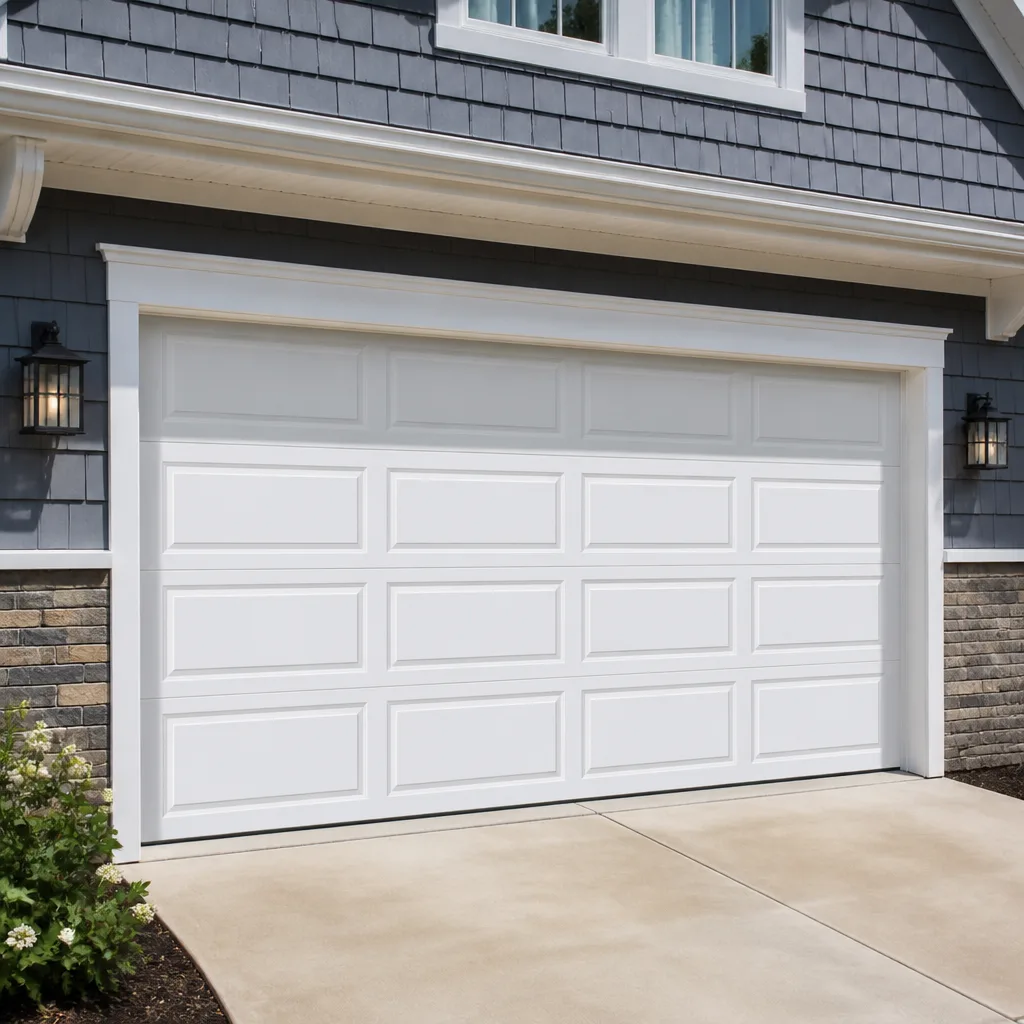 Raised-panel steel
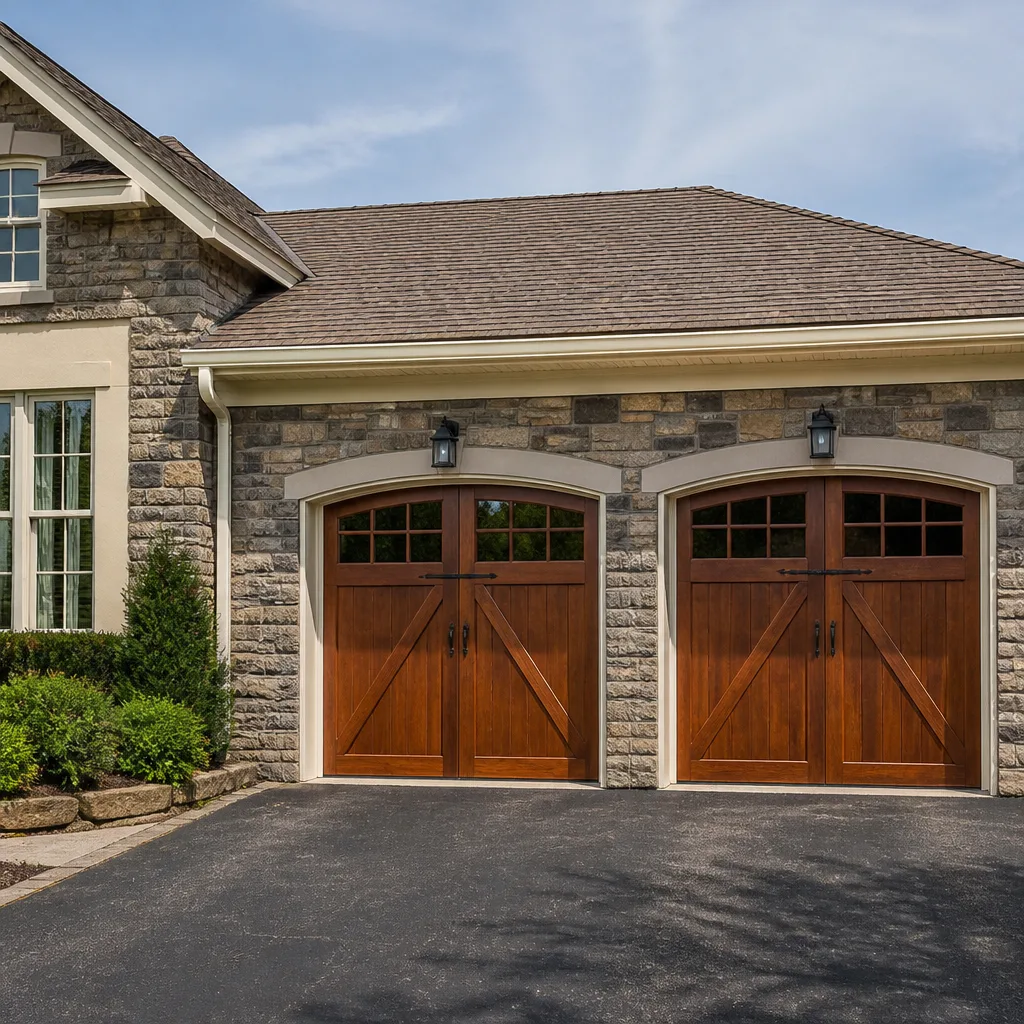 Carriage house
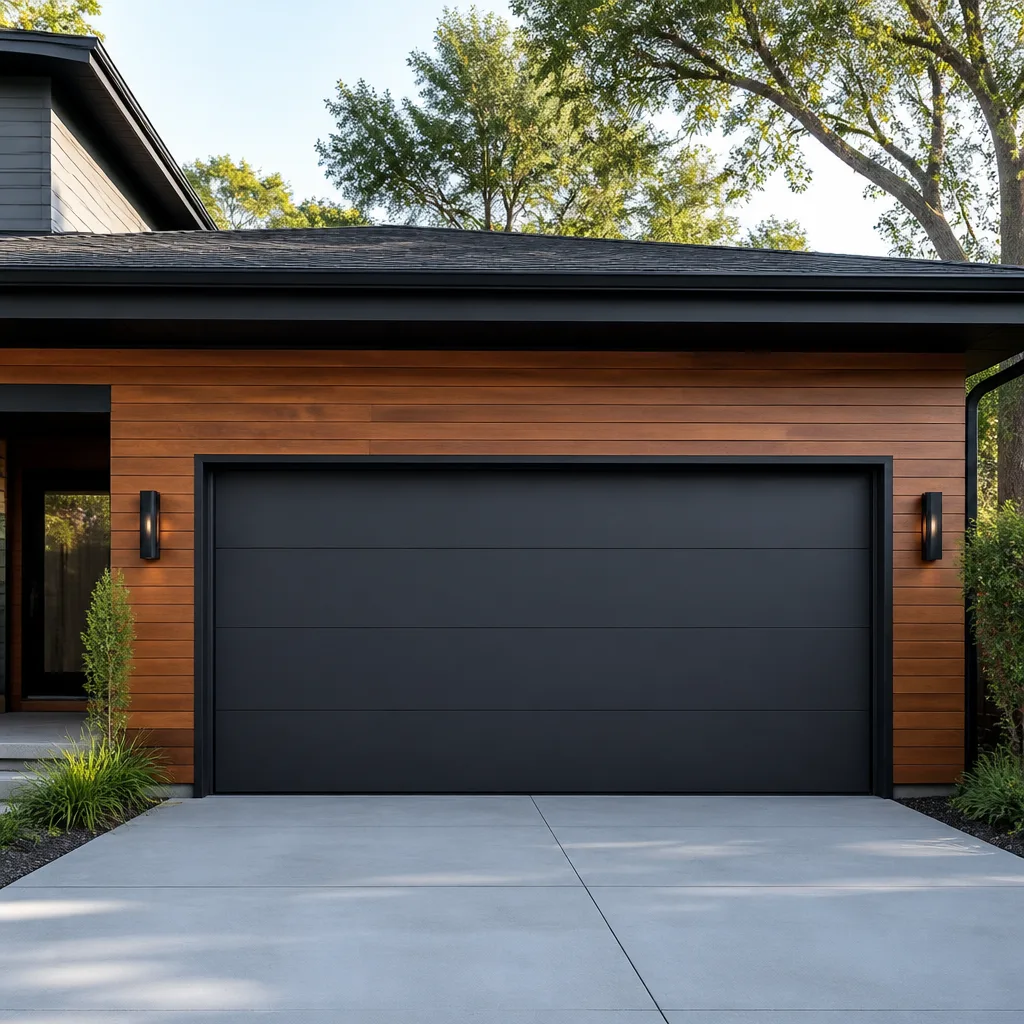 Modern flush
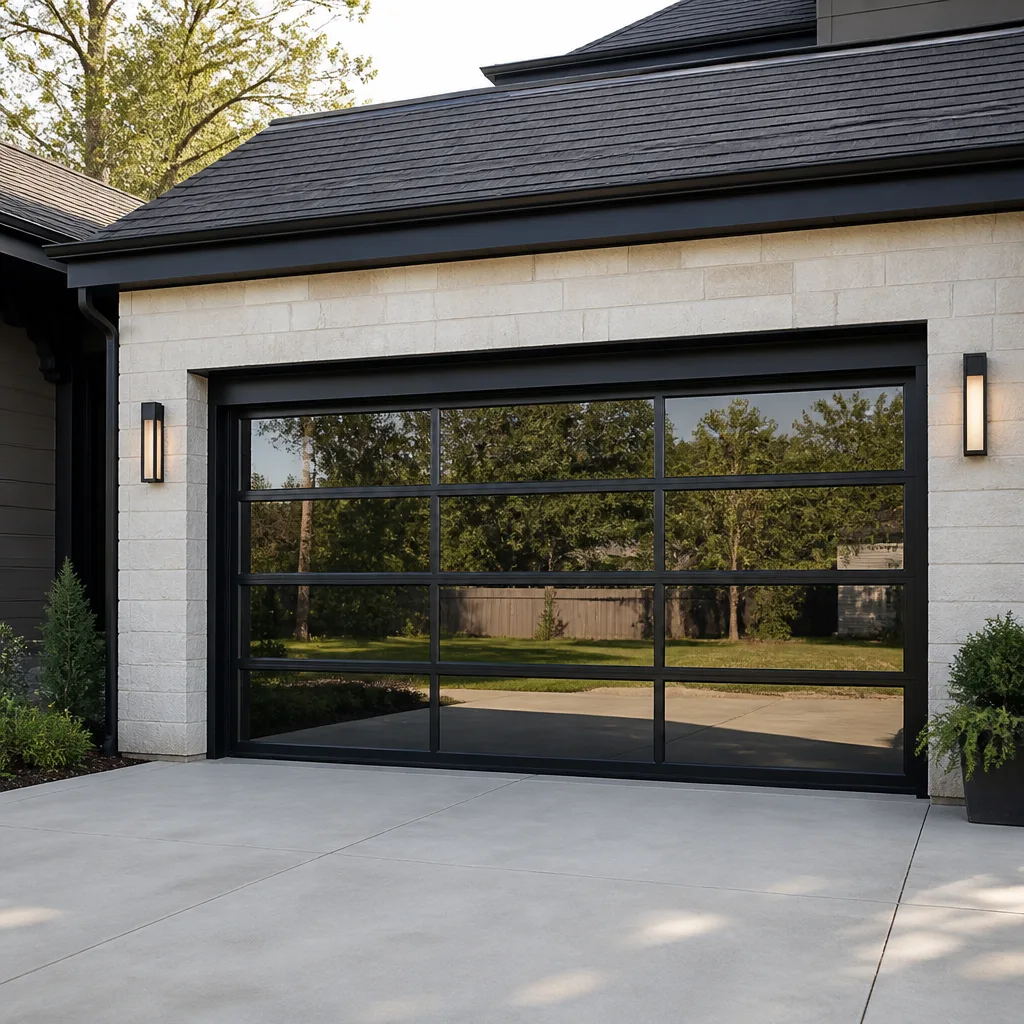 Full-view glass
 LiftMaster openers
 Chamberlain openers
Full 25-point door and opener safety check with every visit - springs, cables, rollers, tracks, and your LiftMaster or Chamberlain opener included
You get a price before we start. It does not change when the pro arrives.
Get your free estimateGarage Door Warning Signs: A Wayne Homeowner’s Reference Guide
A garage door that hesitates for two seconds before it opens isn’t a nuisance. It’s a motor-under-strain signal, and in our experience it often shows up 30 to 60 days before an opener fails completely. Most homeowners only think about the door once it stops working entirely, which is exactly the wrong time. This guide does something different from the usual warning-signs list. Instead of naming symptoms in isolation, we map each one to its likely cause and an honest time-to-failure window, so you know whether you have a week, a day, or no time left to act in Wayne.
Quick Answer
Garage door warning signs in Wayne usually show up first as sound (grinding, popping, scraping) or as a door that hesitates, reverses, or runs unevenly. Grinding points to opener gears or rollers, popping to a torsion spring losing tension, and scraping to a rubbing track or panel. Symptoms tied to springs or cables mean stop using the door now and book a technician; cosmetic noise and door-seal issues can wait a short while.
Styles & brands we work with
- Raised-panel steel
- Carriage house
- Modern flush
- Full-view glass
- LiftMaster openers
- Chamberlain openers
Table of Contents
- What Each Noise Is Telling You
- Spring and Cable Warning Signs: The Urgent Tier
- Opener Warning Signs and the 30 to 60 Day Window
- Track, Roller and Hardware Signs
- When the Door Hesitates or Reverses
- How Wayne’s Older Housing Stock Creates Its Own Patterns
- DIY-Addressable Signs vs. Do-Not-Operate Signs
- A Word on Safety
Garage Door Warning Signs at a Glance
Before we go symptom by symptom, here’s a reference table that maps the most common signs to their likely cause and urgency. Use it as a first-pass sorting tool, not a diagnosis. The tool is a conversation starter; a technician with the door in front of them makes the final call.
| Warning Sign | Most Likely Cause | Typical Urgency |
|---|---|---|
| Loud grinding while opening | Worn opener gears or dry rollers | Weeks to a month |
| Sharp popping or bang | Torsion spring losing tension or broken | Stop using now |
| Scraping along one side | Track bent or a roller out of the channel | Days to a week |
| Door hesitates, then opens | Motor strain or a binding track | 30 to 60 days to failure |
| Visible slack in a cable | Cable off the drum or failing | Stop using now |
| Two-inch gap in a torsion spring | Spring has snapped | Stop using now |
| Door reverses before closing | Safety sensor misaligned or obstructed | Check today, fix within days |
| Door sags on one corner | Cable or spring imbalance | Do not operate |
One pattern we see again and again in Wayne: homeowners fix the cheap symptom and ignore the expensive one next to it. Fresh paint on a rubbing panel hides nothing. The track underneath is still out of alignment, and the scraping will return within a week or two.
What Each Noise Is Telling You
Noise is the first channel a failing garage door uses to talk to you. What matters is matching the specific sound to the specific mechanical part. A grinding, a popping, and a scraping each come from a completely different spot in the door system, and they don’t all demand the same response window.
Grinding
Grinding usually comes from the opener. On an older chain-drive unit, the drive gear inside the motor housing can wear down, so the metal-on-metal contact gets louder each time you run the door. On a belt or chain system, dry rollers or a track that’s slightly off line can produce the same sound from the door side. If grinding appears alongside a door that hesitates, treat it as a motor-strain signal with a 30 to 60 day window before the opener gives out. If grinding builds quickly over several days, that window shrinks to a week or less.
Popping
Popping is often the torsion spring. In older Wayne homes with original hardware, springs that have reached their cycle limit start to unwind unevenly, and the noise you hear is the coil gripping and slipping. A single loud bang followed by a dead door is the spring snapping entirely. Popping means stop running the door. There’s no “wait and see” on this one.
Scraping
Scraping usually points at the track. A bend in the channel, a roller that’s popped out of the geometry, or a panel that’s drifted out of square all cause the door to rub as it travels. Scraping won’t usually fail catastrophically, but it wears the roller and the panel edge every cycle, so weeks of scraping does real damage. Address it inside a week.
Squealing and Creaking
These tend to be the least urgent. Dry rollers, a stiff hinge, or a lack of lubrication are the common causes. A little tune-up is often the whole fix. But if the squeal is paired with any hesitation or reversal, treat it as an opener or spring issue first and a lubrication issue second.
Spring and Cable Warning Signs: The Urgent Tier
Spring and cable failures are the urgent tier of garage door warnings. Every sign in this section means the same thing: stop running the door and book a technician. High-tension torsion and extension springs hold hundreds of pounds of energy every second the door is at rest. A failing spring or a slack cable is a mechanical failure waiting on one more cycle to finish itself. garage door spring repair is one of our named services for a reason – trained technicians handle it, not a general handyman.
Signs that mean stop using the door
- A two-inch gap in a torsion spring over the door. That gap is the literal break.
- Visible slack in one of the two cables that run down the sides. A slack cable means the lift system has already lost balance.
- A door that lifts partway and then feels unusually heavy or light under hand.
- A door that sags at one corner or doesn’t sit straight in the opening.
- A loud bang from the garage followed by a door that won’t open at all.
- Any spring that looks stretched longer than its matching neighbor.
Time to failure on a spring that’s already showing these signs is effectively zero cycles. The next press of the remote could be the one that cracks a door panel or, worse, sends the door down while someone is walking under it. Call before you try the opener again.
Signs that give you a short window
Not every spring symptom is instant-death territory. A spring that’s getting noisy but still holding tension, or a torsion bar that squeaks on every turn, tends to give you somewhere between one and four weeks of usable life before the spring clearly needs replacing. That’s the window where proper spring replacement takes an hour or two. Waiting longer usually means the whole door is out of balance and the repair is more involved. If a matched pair of springs is original, they age together, so replacing both when one fails is the way the job is normally done.
Opener Warning Signs and the 30 to 60 Day Window
Opener failures rarely happen overnight. They follow a predictable ramp, and that ramp usually takes 30 to 60 days from the first hesitation to a dead unit. The mistake we see most is homeowners treating each step as a separate, minor annoyance instead of reading the pattern.
The typical escalation, in order
- Hesitation on the first press. The door sits for a second or two before moving. The motor is drawing more current to start.
- Straining under load. The motor sounds labored on the lift but normal on the way down. Gravity helps going down, so the lift side shows the strain first.
- Intermittent reversal. The door goes up a foot, stops, and goes back down. This can be the safety sensor, but it can also be the opener’s force limit kicking in because the motor can’t handle the load.
- Lights flicker on the opener housing. The control board is straining under the current draw.
- No response at all. The motor overheats and gives up, or the drive gear fails.
Once you’re past step three, you’re inside the last two weeks of the window in most cases. garage door opener repair handled before the unit dies is usually simpler and less expensive than the alternatives. It also protects the door: an opener that’s fighting a spring issue on a door with original hardware will take the spring out with it.
Smart opener specific signs
If you have a LiftMaster or Chamberlain with myQ, or a Genie with Aladdin Connect, the app is effectively a diagnostic tool. It logs every open and close and often records the failure. We’ve seen alert patterns in connected openers – repeated obstruction alerts, missed confirmations – that flag a coming failure before any noise shows up in the garage. Check the history in the app if the door has started acting strange. It’s free evidence.
Legacy opener signs
Original openers from decades past, particularly on Craftsman and Raynor systems, show a different pattern. The mechanical parts hold up remarkably well, and the electronics go first. You’ll get a dead wall button, a remote that only works when you’re six feet from the door, or a light that flickers when the motor runs. Those are usually bad boards or failing capacitors, and repair is a technician job rather than a replacement.
Track, Roller and Hardware Signs
Track and hardware issues are the slow-burn category. They’re rarely dangerous on their own, but they eat neighboring components. A bent track or a worn roller makes the door bind, which drives up the force needed from the opener, which strains the spring. Fix the small problem before it becomes a system problem.
- Scraping sound during travel. A roller has popped out of the channel or the track has bent slightly out of line.
- Door rubs at the top or bottom of the opening. The track is out of square or a hinge has bent, so the panel meets the jamb unevenly.
- Visible gap between the door and the track. A roller has worn thin or hopped out of the geometry.
- Loose or rusted hinges. Common on doors in Wayne that face heavy summer humidity and winter road grime. A loose hinge eventually drops a panel out of alignment.
- Worn weather seal. If the seal at the bottom of the door is torn, cracked, or permanently flattened, air, water and debris come in. That’s a comfort problem, not a safety problem, so addressing it inside a few weeks is fine.
- Door sags on one corner. Do not run the door. The cable or spring is failing. Treat it as urgent, not as a track problem.
Cosmetic issues like a faded panel, a scratched paint finish, or a plastic handle that rattles can wait indefinitely. They don’t affect operation. Track and hardware signs that actually change how the door travels need attention inside a week.
When the Door Hesitates or Reverses
Hesitation and reversal are the two symptoms homeowners report most often, and they can come from either end of the door system. Sorting them apart is the whole trick. Here’s how we work through it in our heads before we even look at the door.
Hesitates, then opens
Nearly always a motor-strain signal. The opener is drawing more current to break the door loose, usually because the door itself is heavier than it was (spring losing tension) or something in the track is binding. Roughly 30 to 60 days of usable life left if a spring is the cause; shorter if the opener’s drive gear is the load. Book a technician inside two weeks.
Opens a foot, then reverses
Two likely causes. Either the safety sensors are misaligned or blocked, or the opener’s force limit is being tripped by a heavy door. Rearranging what’s on the floor near the sensors solves the first. Nothing but a technician solves the second. If you’ve cleared the path to the sensors and it still reverses, it’s the door or opener. Same 30 to 60 day window applies.
Starts closing, then snaps back open
Safety-sensor territory. The small lenses on either side of the door opening need to see each other in a straight line. Anything between them – a broom, a garbage can, a kid’s bike, a snow shovel parked in the way – will reverse the door. Cobwebs and dust on the lens will too. Wipe them down and check the alignment. If it still reverses with a clean lens and clear path, don’t run the door until a technician checks the sensor wiring.
Hesitates on the close, but opens fine
Usually a travel-limit setting or an obstruction at the bottom of the travel. Check the floor where the door meets it. Ice in winter, settled concrete, or a stone that’s rolled into the path can all cause it. Clearing the path fixes it. If nothing is in the path and the door still hesitates on a close, book a call.
See the difference
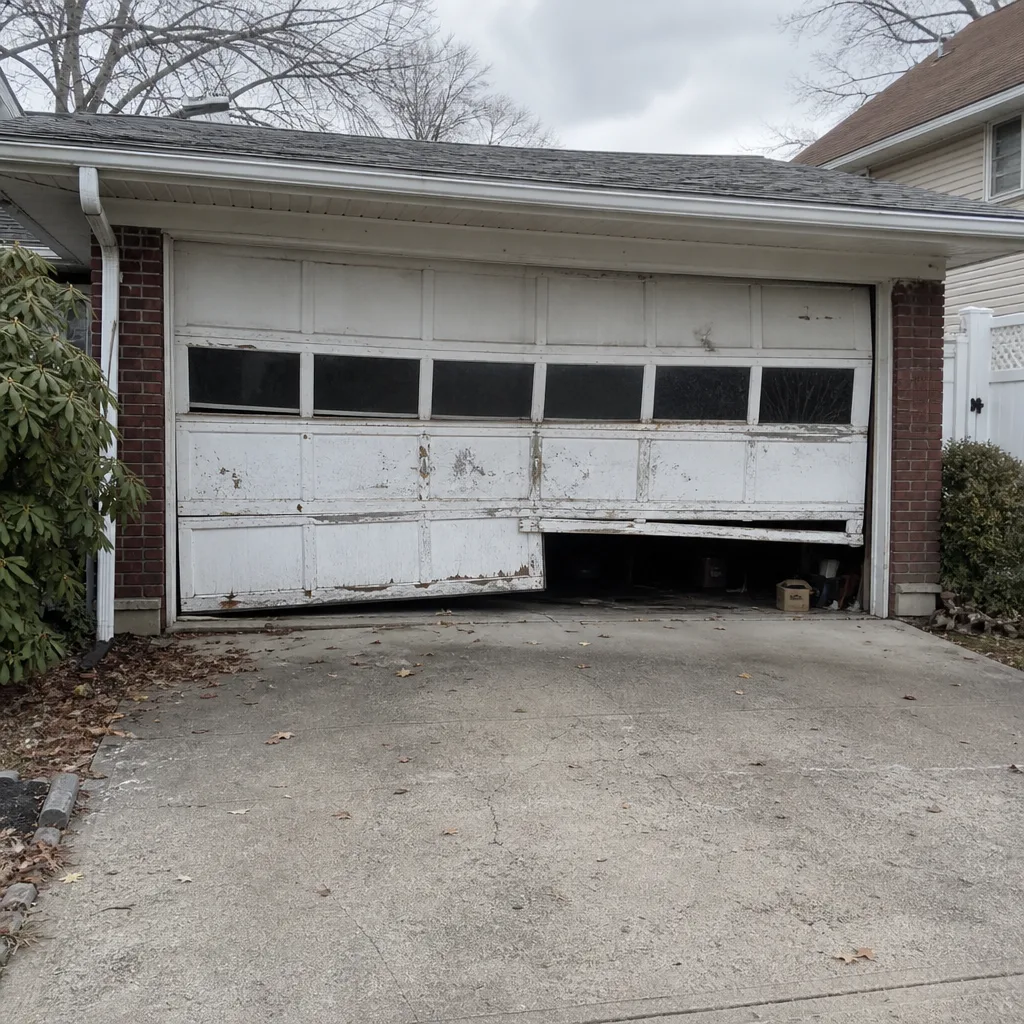 Before
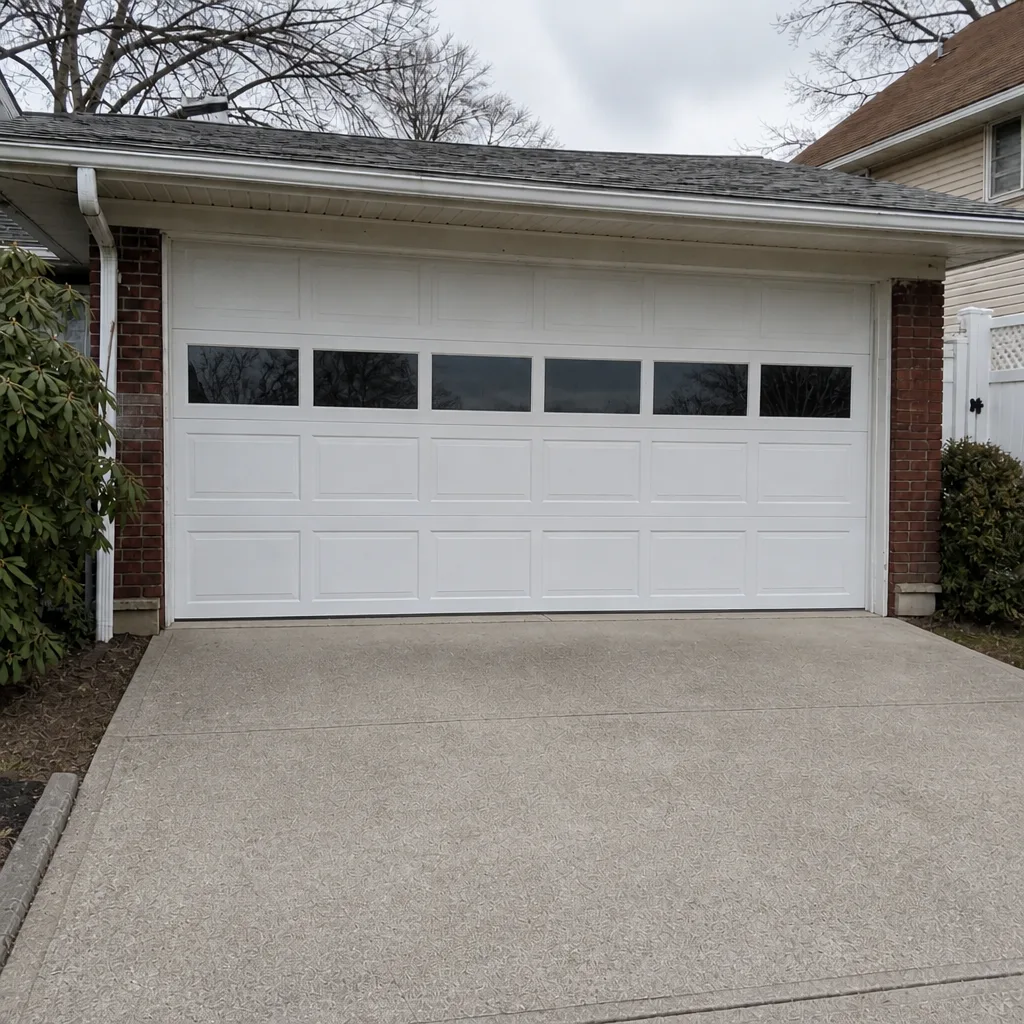 After
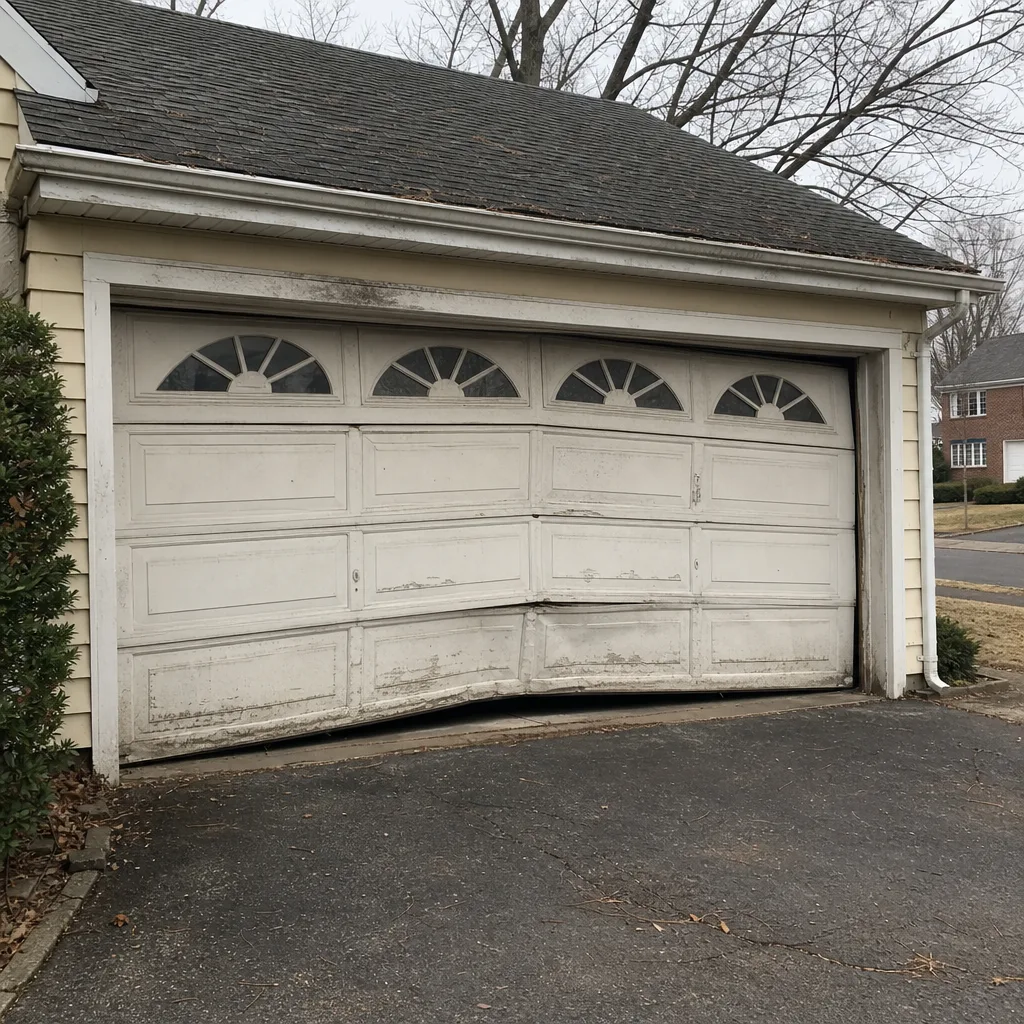 Before
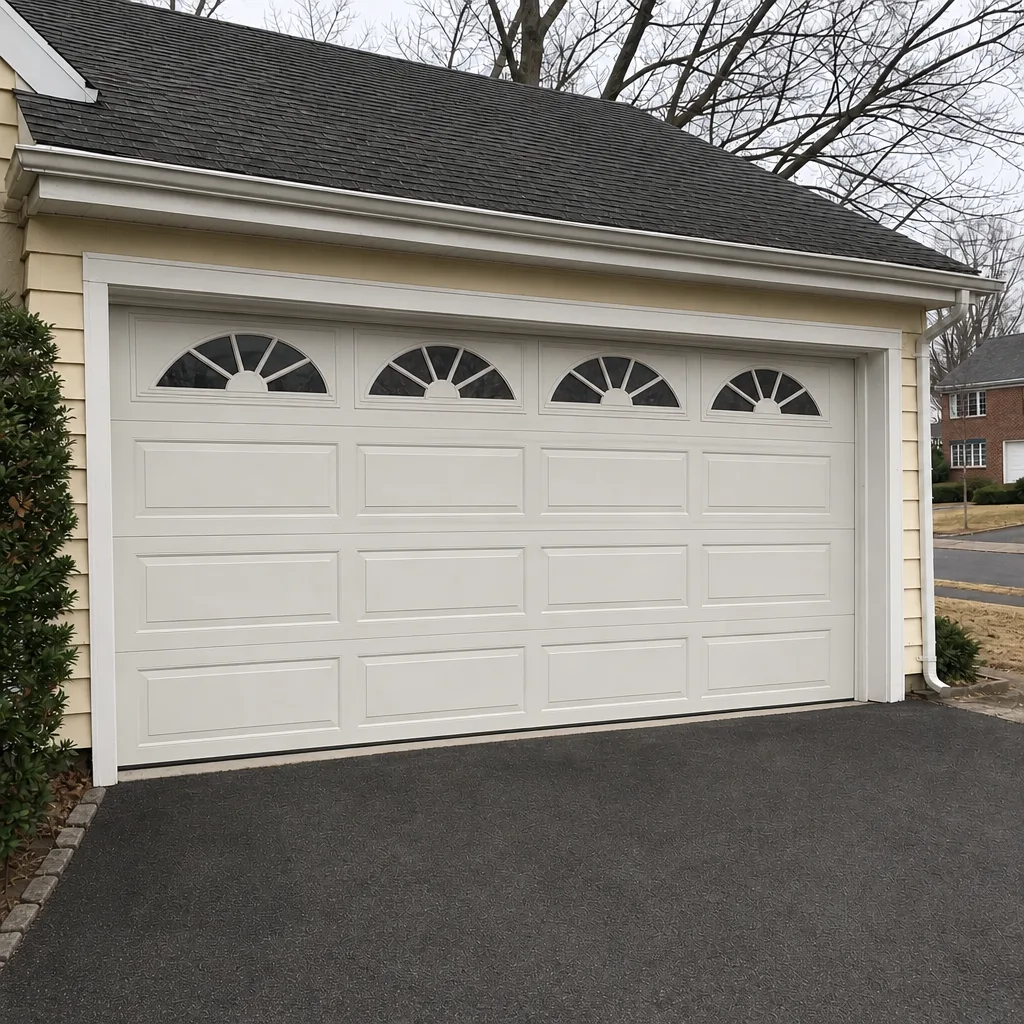 After
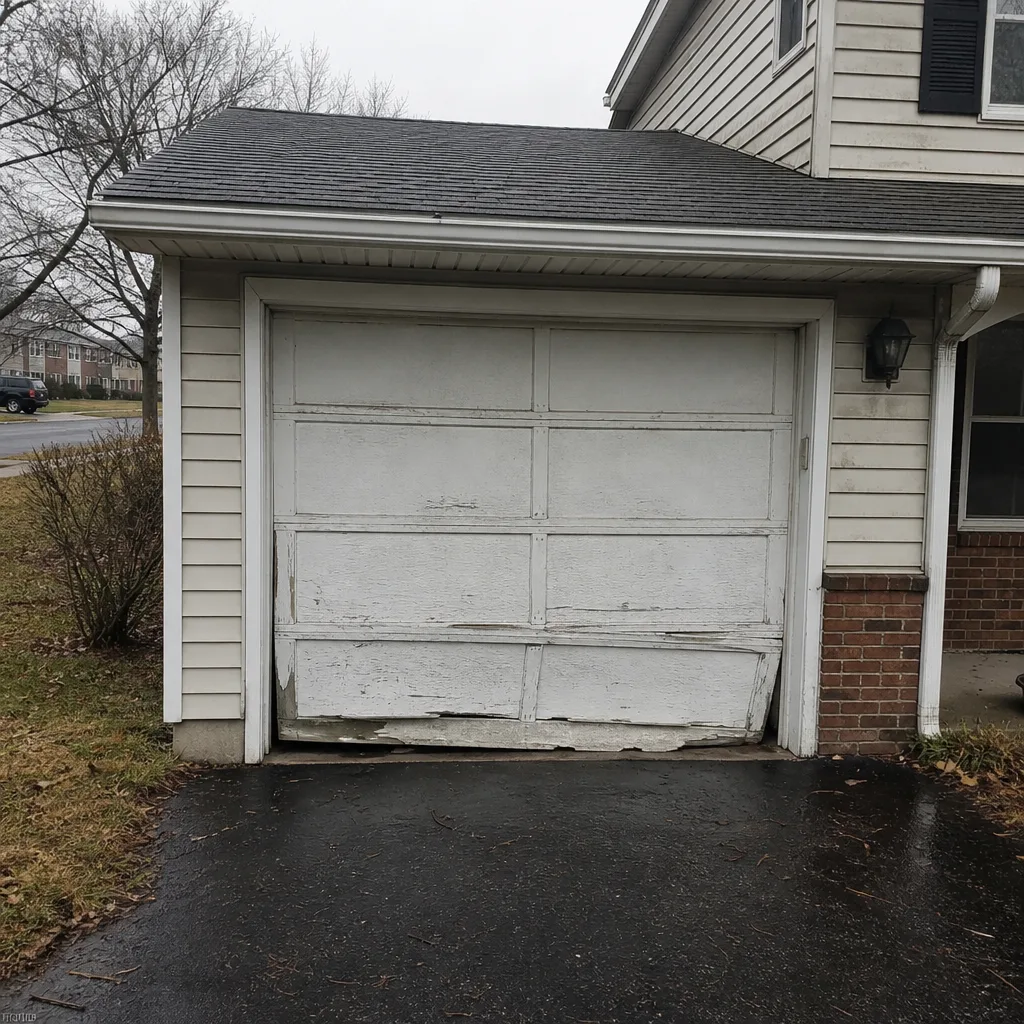 Before
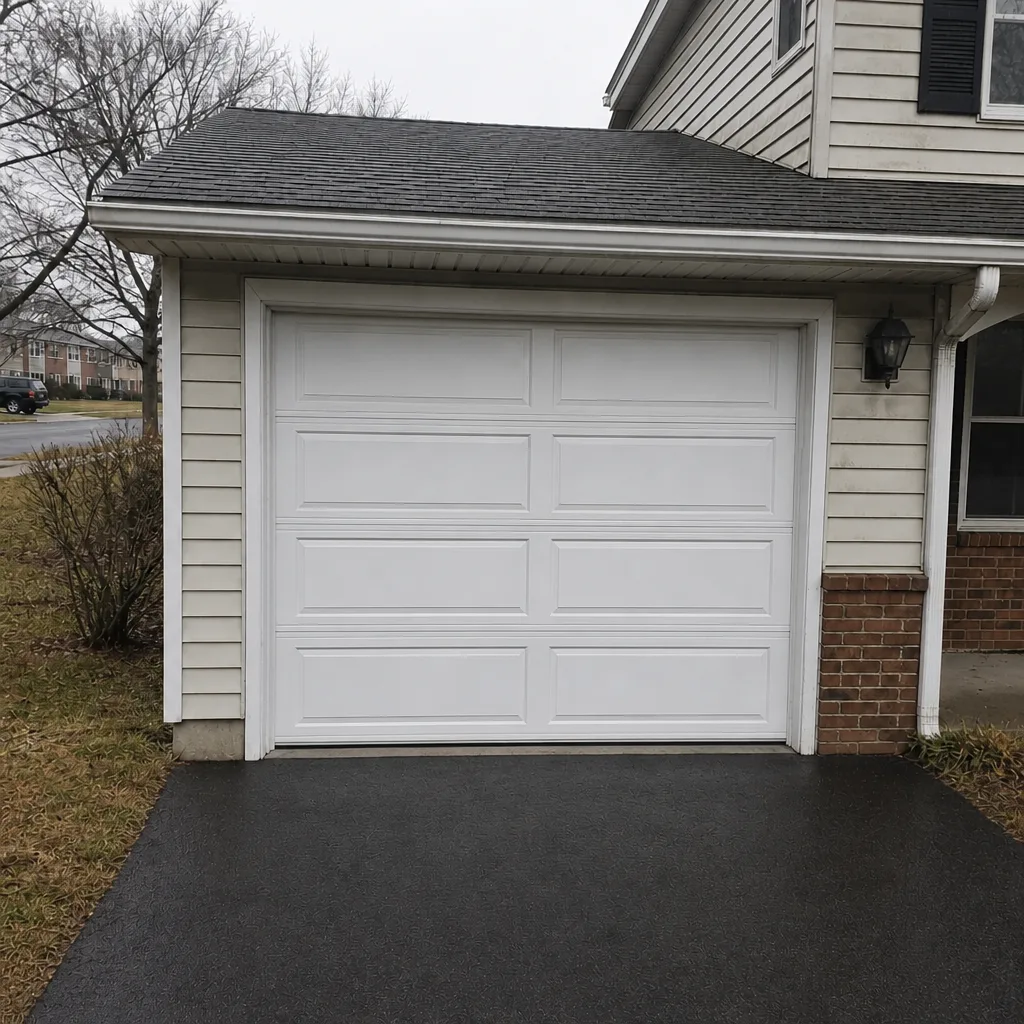 After
How Wayne’s Older Housing Stock Creates Its Own Patterns
Wayne has a mix of housing that produces specific warning-sign patterns most generic guides won’t flag. If you’ve been in a Wayne garage built in the 1980s or earlier, you’ll recognize some of these.
Limited-headroom tracks
Many Wayne garages were built with low ceilings and the door tracks were run tight to fit. That means the door on a low-clearance track has less mechanical margin than a newer install. A new door that technically fits still won’t work well if the track sags or the opener’s rail is running at an angle. The warning sign here is rarely dramatic – a low-clearance door that rubs at the top of the opening, or rollers that grind in the tight part of the curve. If you’ve inherited an old door that was installed on a limited track, expect these signs to show up periodically and budget for a tune-up.
Original 1980s openers still in service
A surprising number of Wayne garages still run the opener that came with the house. They’re often Craftsman or Raynor units, and they’ve outlasted the door they were installed with. The warning signs on these units are subtly different. A wall button that only works if you press hard, a light that flickers and stays flickering, a remote that needs to be two feet from the door – those are all electrical warning signs, not mechanical ones. Repair is possible, but the technician needs the right board, and the correct part has gotten harder to source. If you’re getting multiple electrical signs at once, that’s a replacement case, not a repair.
Weather swings that accelerate wear
Wayne winters bring freeze-thaw cycles that push at the door seal and the concrete under the door, and summer humidity that works on the hinges and the roller grease. On a door that was installed tight, a frozen or settled floor point can look like a travel-limit problem when the real issue is at the concrete. That’s why a technician on-site inspect the entire opening, not just the opener.
DIY-Addressable Signs vs. Do-Not-Operate Signs
Some warning signs you can address yourself. Others mean stop pressing buttons until a technician is on-site. Getting this distinction right is the difference between a cheap fix and a serious injury.
DIY-addressable
- Safety sensor blocked by a broom or trash can. Clear the path and test the door.
- Dirty or dust-covered sensor lens. Wipe clean and realign.
- Remote that needs a fresh battery. Swap it and retest.
- Opener light bulb burned out. Replace it and watch whether the door still works.
- Weather seal that’s worn. Replacement seal is a straightforward upgrade.
- Loose visible bolt on the opener’s mounting bracket. Tighten gently and watch it.
Do-not-operate
- Visible slack in a lift cable.
- A visible gap in the torsion spring.
- A door that lifts partway and feels weightless or excessively heavy.
- A door that sags at one corner or doesn’t sit straight.
- An opener that hesitates and the door above it lifts irregularly.
- Any sign of a broken spring.
For the do-not-operate list, don’t try a fix. The energy stored in a proper garage door system has killed trained people when a part let go at the wrong moment. garage door repair is the right next step.
A Word on Safety
Garage doors are the largest moving object in most homes, and the lift system – springs, cables and the opener’s motor – stores energy the whole time the door sits at rest. That’s the specific reason certain warning signs mean stop. A torsion spring at rest is holding hundreds of pounds of tension, and a cable under tension can snap. Neither part is safe to test or adjust by hand.
The safe thing to do when you spot a do-not-operate sign is not to open and close the door “just to check.” Leave it where it is. Test the opener only after a technician has a look, and don’t try to remove or adjust a spring or a cable yourself. For the warning signs on the mild side of the list, informed observation is fine. Anything tied to springs or cables isn’t.
Common Mistakes to Avoid
- Waiting for a spring-popping bang before acting. Popping, sagging and slack cables show up before the snap. Watch for the small signs and use them.
- Ignoring opener hesitation because the door still opens. The hesitation is the warning. Once the door stops opening, you’re past the window.
- Using WD-40 on rollers and springs. WD-40 attracts dust and gum. Dry rollers want the appropriate lubricant, and torsion springs on a Wayne door want a technician’s routine service.
- Fixing a scraping symptom without diagnosing it. A bent track doesn’t go straight because you tightened a bolt. A technician identifies the actual point of contact and fixes that.
- Buying a new opener when the door is the problem. A straining opener on a door with a failing spring will fail again after replacement. Sort the door and the opener together.
- Skipping the safety sensor alignment check. A door that reverses randomly almost always has a misaligned or dirty sensor lens. Check that first before booking a call.
- Assuming a brand-new home is exempt. Even a new Wayne home with a modern opener needs the sensor, the travel limits and the force settings checked once after install. A poorly adjusted opener is a warning-sign source on its own.
When to Call a Professional
Book a technician when a warning sign involves a spring, cable, sagging door, or any opener that has been hesitating or reversing on its own. Stop operating the door until then. Also call when a scraping or grinding sound won’t resolve after a sensor check or a fresh remote battery, and when an original 1980s opener in a Wayne home starts throwing electrical signs in bunches. A general handyman isn’t the right call for high-tension spring work or a smart opener that’s failing to communicate – the right brand-familiar technician is. Wayne Garage Door Repair Co covers Wayne Garage Door Repair Co and the surrounding Wayne area for repair, opener service, spring replacement and installations. We work on Amarr, Raynor and the other major systems you’ll find in town. Free estimates in Wayne – call (833) 482-6691.
Frequently Asked Questions
The first sign worth taking seriously is a two-inch visible gap in a torsion spring, followed by any slack in the lift cables. Both mean stop running the door. Grinding, scraping and hesitation are also warning signs, but they give you a short window to schedule a technician rather than a stop-now.
Sometimes, but not reliably. A hesitation is usually a motor-strain signal, and the typical window from first hesitation to opener failure is 30 to 60 days. On a door with a spring problem, the window is often shorter. Book a technician within two weeks and you’re inside the safe margin.
Popping points to the torsion spring losing tension or slipping on the torsion bar. A single sharp bang followed by a dead door usually means the spring has snapped. Either way, stop operating the door and get a technician out to look at it.
Yes, usually. Flickering opener lights point to electrical strain on the drive board or motor. On older Craftsman and Raynor units, it can also indicate a failing capacitor. It’s not urgent, but book a technician before the door stops responding altogether.
Wayne homes from the 1980s and earlier often have limited-headroom tracks and original openers still in service. Those two facts create their own warning patterns: rubbing at the top of the opening, uneven roller wear in the tight bend, and lots of electrical signs as the original opener finally ages out. Newer Wayne homes with smart openers have app histories that log failures before any noise shows up.
No. Anything involving a spring, a cable, or a sagging door means stop the door and call a technician. Those components store enormous energy even at rest, and the risk of a spring letting go or a cable snapping is real. Wayne Garage Door Repair Co handles that work every day – call (833) 482-6691 for a free estimate in Wayne.
The Bottom Line
Read the garage door’s behavior as a countdown, not a checklist. Grinding is usually a 30 to 60 day window on the opener. Scraping is a week. Popping, cable slack and a sagging corner are zero – stop the door and call. Match the symptom to its system, respect the do-not-operate list, and use the mild symptoms as an early booking signal rather than a reminder to watch and wait. That’s the whole habit: read the sign early, act within its window, and never hand-test a spring. In Wayne, with the housing stock we have and the weather swings we get, that habit keeps a door running for years longer. Our technicians have up to 12 years of experience diagnosing these exact patterns. Call (833) 482-6691 for a free estimate.
Written by the team at Wayne Garage Door Repair Co.