Last updated November 23, 2026
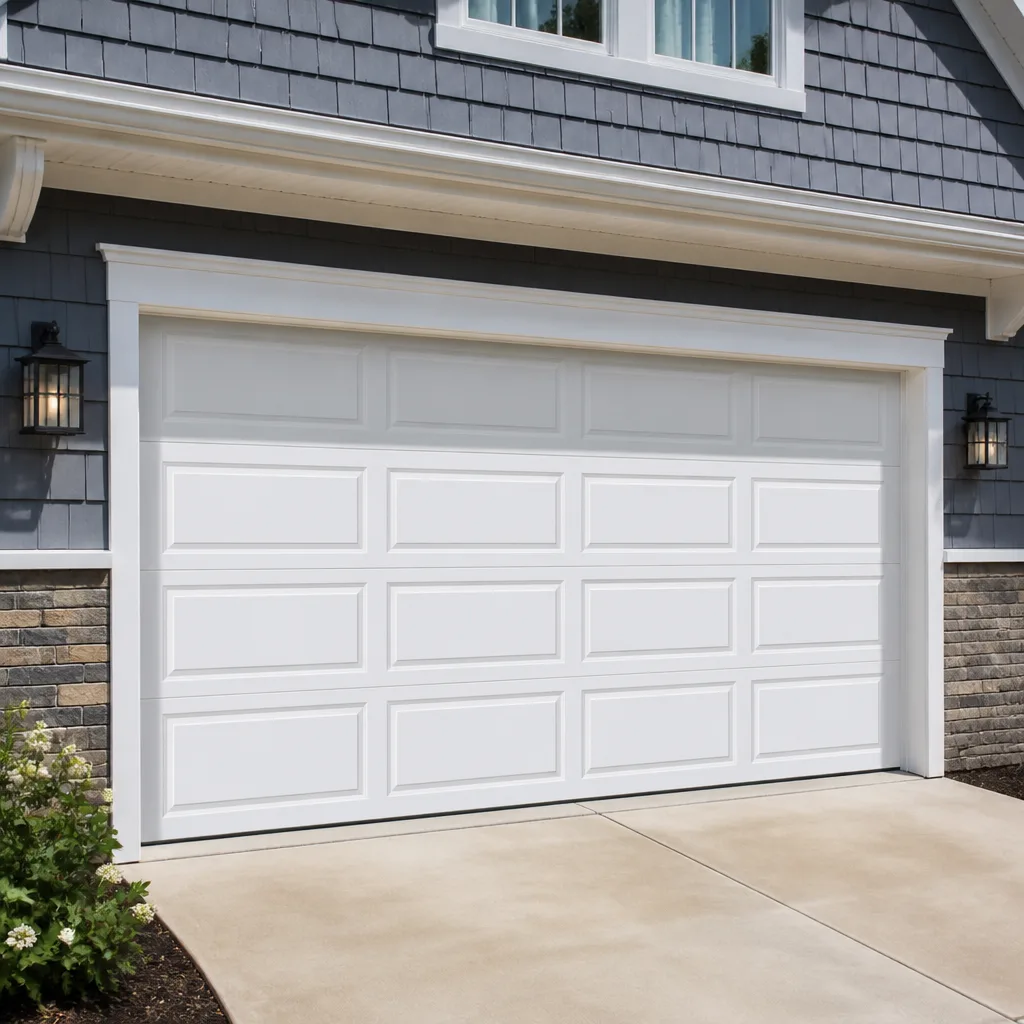 Raised-panel steel
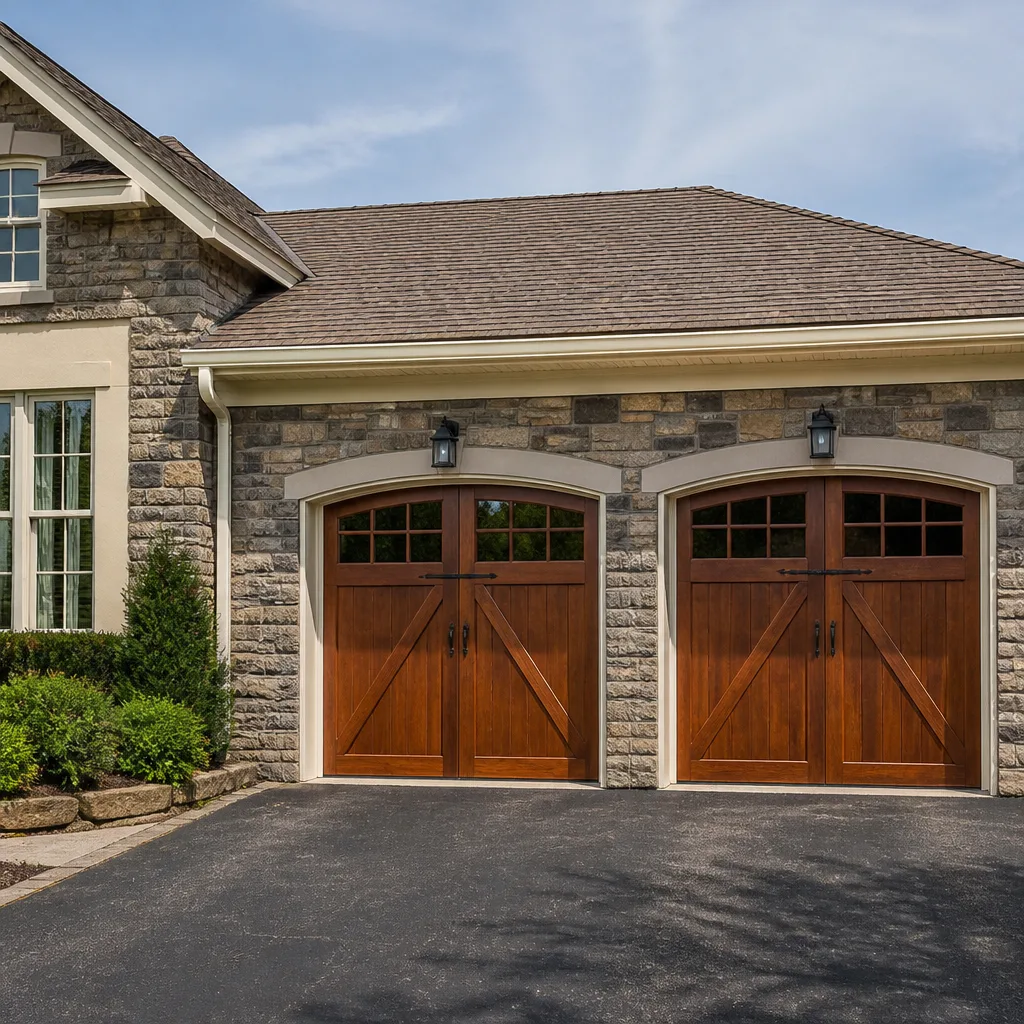 Carriage house
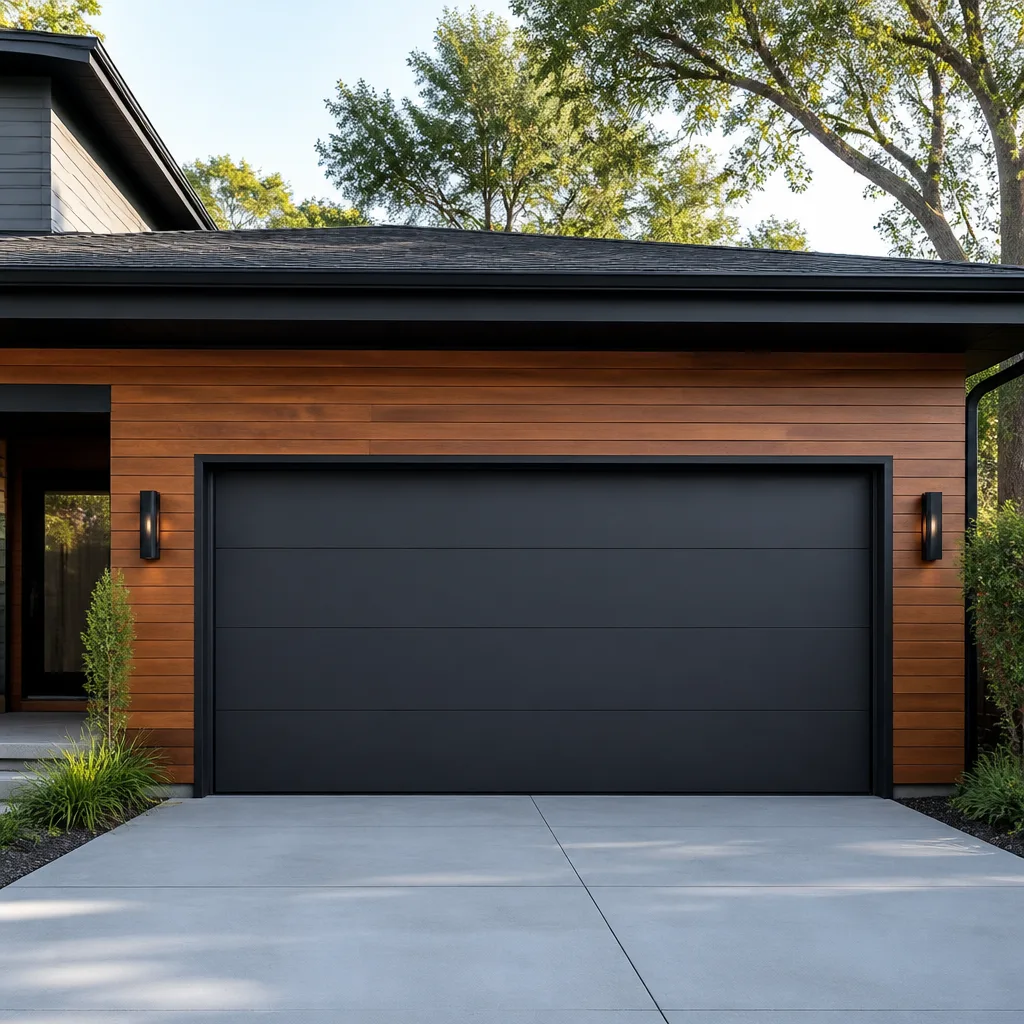 Modern flush
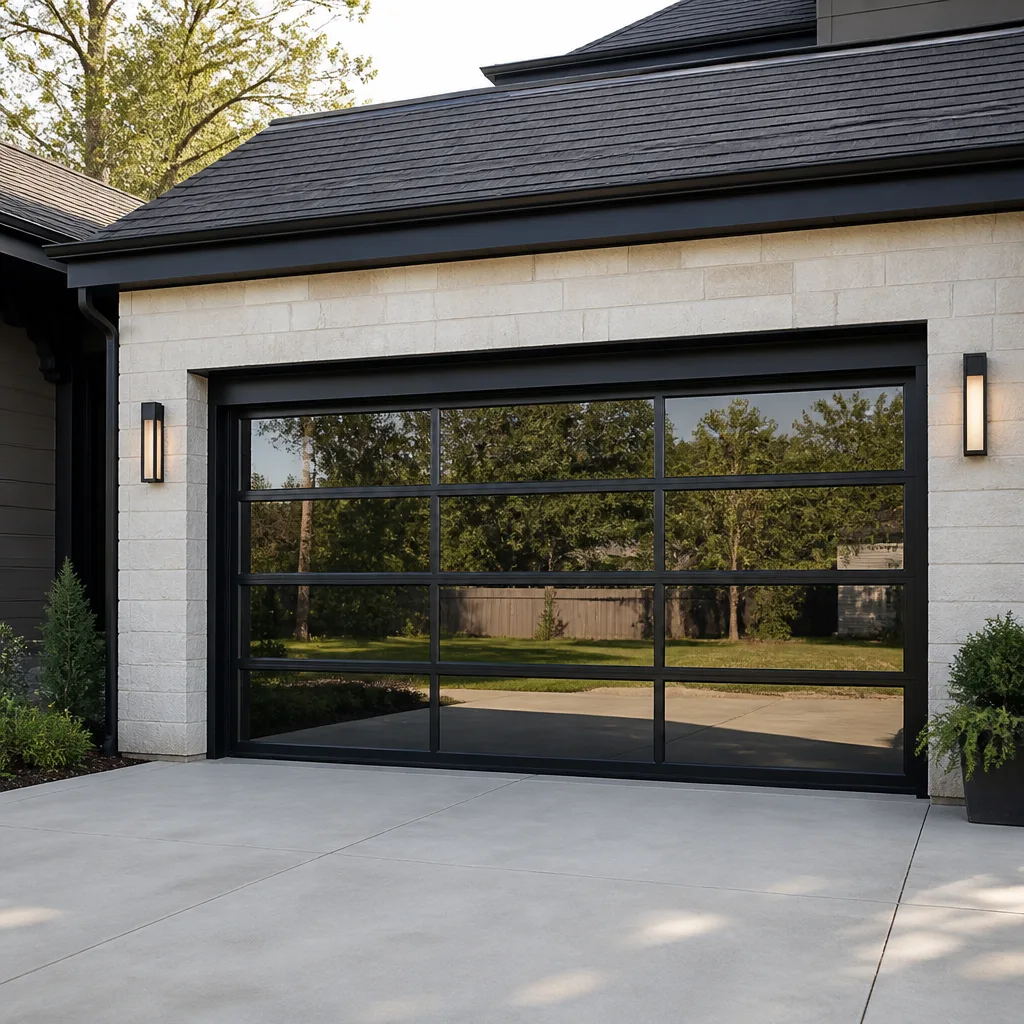 Full-view glass
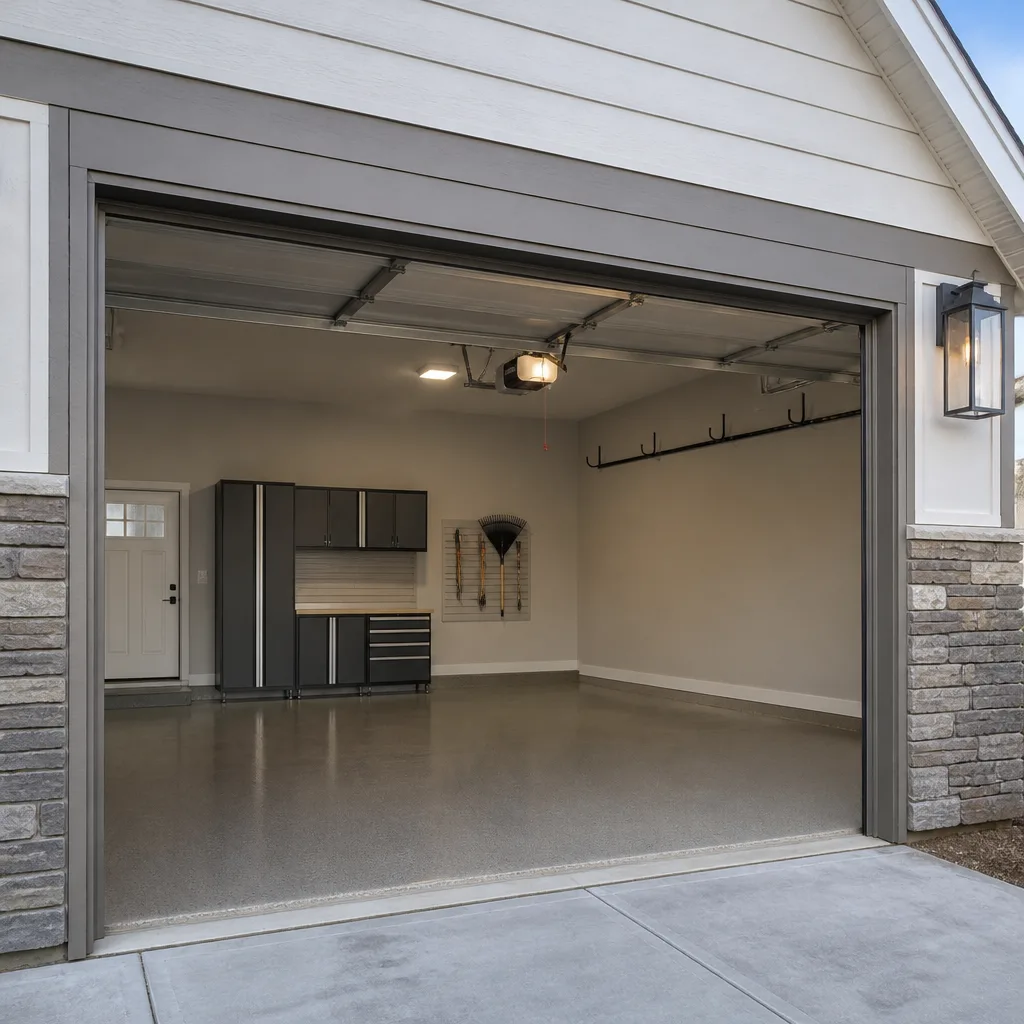 LiftMaster openers
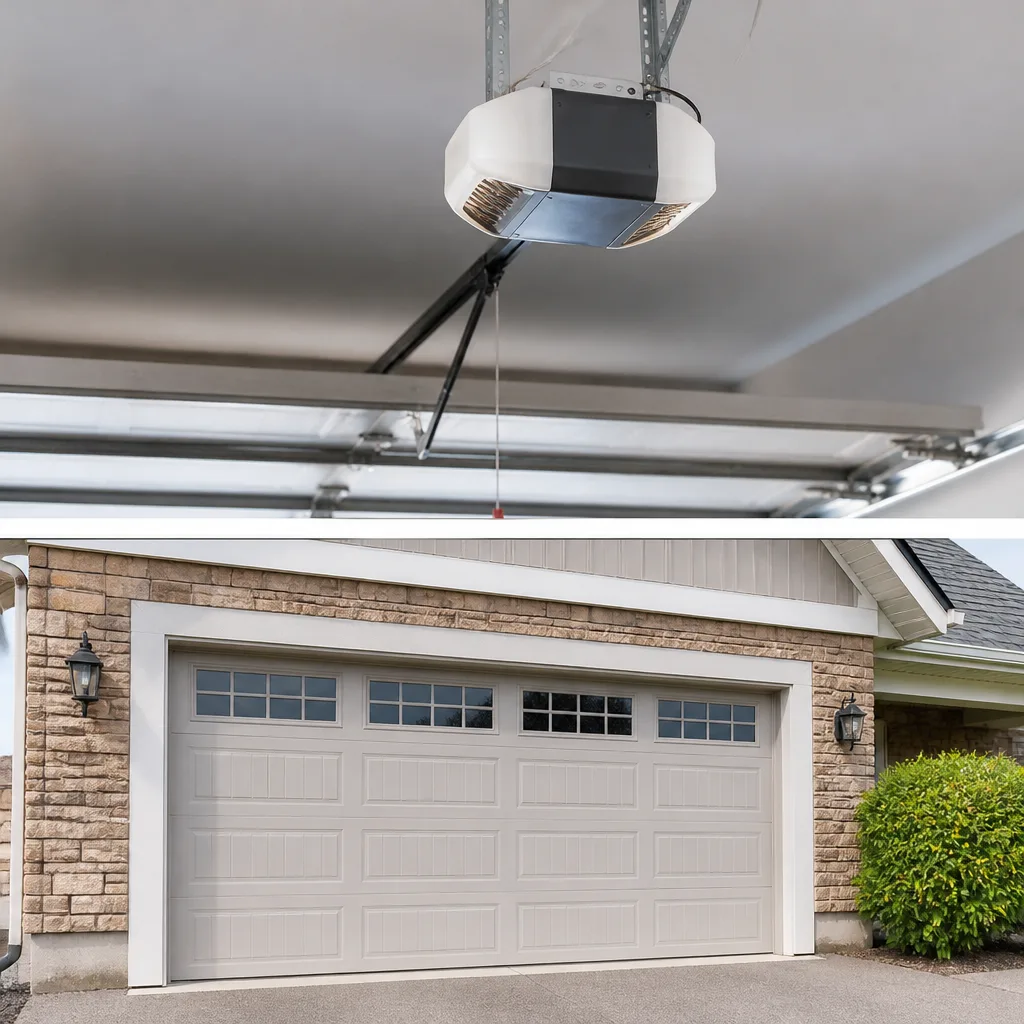 Chamberlain openers
Full 25-point door and opener safety check with every visit - springs, cables, rollers, tracks, and your LiftMaster or Chamberlain opener included
You get a price before we start. It does not change when the pro arrives.
Get your free estimateThe Complete Guide to Garage Doors in Wayne
Most Wayne homeowners don’t know what brand or model opener is bolted to their ceiling until it quits at 7am on a Tuesday. That gap in knowledge is what turns a small repair into an expensive emergency call, because whoever answers the phone has to start from zero while your car sits trapped inside. Wayne’s housing stock makes this worse than it needs to be. The bulk of the town was built between the 1970s and 1990s, and most of those colonials and split-levels still run the original-style hardware they came with, or a first-generation replacement that’s now older than the family living there. This guide is about what’s actually in Wayne garages, how those systems age in Passaic County weather, and how to document what you own before something breaks.
Quick Answer
Garage door problems in Wayne usually trace back to the age and construction era of the house: 1970s-1990s colonials and split-levels with attached garages typically have wide two-car openings, limited headroom, and opener systems that are either original or one generation removed. The most common failures are worn torsion or extension springs, opener logic boards and drive gears, and track alignment drift from seasonal freeze-thaw cycles. Knowing your door’s brand, spring type, and opener model before a breakdown is what keeps a simple repair from becoming an emergency.
Styles & brands we work with
- Raised-panel steel
- Carriage house
- Modern flush
- Full-view glass
- LiftMaster openers
- Chamberlain openers
Table of Contents
- What Wayne’s Housing Stock Tells You About Your Garage Door
- Which Parts Fail Most on Wayne Garage Configurations
- How to Document Your Garage Door System Before It Breaks
- How Passaic County Weather Ages Wood, Steel, and Composite Doors
- Why Springs and Cables Are Not a DIY Job in Wayne
- Opener Generations: Legacy, Smart, and Everything Between
- Cosmetic Upgrade vs. Structural Repair: A Wayne Resale Decision
- Repair or Replace? A Decision Framework for Wayne Homes
What Wayne’s Housing Stock Tells You About Your Garage Door
Wayne grew up in layers, and each layer left behind a different kind of garage. The neighborhoods built through the 1970s and 1980s are dominated by colonials and split-levels with attached garages, and those garages were designed around a two-car opening roughly 16 feet wide. That width matters because it doubles the load on the springs and the opener, and it means a single worn spring has to lift more door than a narrower setup would.
Split-levels add their own wrinkle: the garage often sits under living space, so headroom is compressed. Low-headroom garages force the door to use low-profile track and sometimes a different spring configuration than a standard-height garage would. Homeowners who buy a replacement door without accounting for that end up with a door that fights its own tracks.
The later construction in Wayne tends to have higher ceilings and more standard clearances, which opens up more options for both doors and openers. Older homes near the established parts of town are more likely to still have original hardware or a first replacement that’s overdue.
Two practical takeaways for Wayne homeowners:
- Wide two-car openings mean heavier doors and higher spring loads. Expect springs to be the first wearable part to fail.
- Low-headroom split-level garages limit your door and track options. Measure before you shop, not after.
- Era of construction tells you roughly what generation of opener you’re dealing with, which determines whether parts are still available or you’re looking at a replacement.
If you’re unsure how your setup compares to a standard one, that’s exactly the conversation to have with a technician before any work is quoted. We work on doors across every era of Wayne housing and can tell you what you have from a few minutes of inspection. Our garage door repair team handles everything from a single worn part to a full system evaluation.
Which Parts Fail Most on Wayne Garage Configurations
Certain parts fail on a schedule, and Wayne’s typical garage configurations push specific ones to the front of the line. Understanding what wears out and why saves you from misdiagnosing a symptom.
On wide two-car doors, springs take the most load. A 16-foot door is heavy, and both torsion and extension springs on those doors do more work per cycle than springs on a single-car door. They’re also the part most homeowners mistake for something else, because a broken spring often looks like a dead opener from inside the car.
On low-headroom split-level garages, track alignment is the recurring issue. Tight clearances leave less margin for the door to drift before it starts binding. Seasonal movement in the slab and framing is enough to push a door out of alignment over a few years.
On 1970s-1980s homes, opener drive gears and logic boards are the weak points. The mechanical guts of an older opener wear in predictable ways, and the electronics on first-generation units eventually give out. When that happens, the question becomes whether the opener can be repaired or the whole unit should be replaced.
Here’s how the failure pattern usually breaks down by part:
- Torsion springs: the highest-wear component on any door, and the most dangerous to replace without training.
- Extension springs: common on older Wayne homes, prone to stretching and losing tension over time.
- Cables: fray from repeated cycling, and a snapped cable is a safety issue, not a nuisance.
- Rollers and hinges: wear quietly and cause noise and wobble long before they fail outright.
- Opener gears and boards: the eventual failure point on any older unit, and the reason legacy openers get replaced rather than repaired.
Knowing which of these applies to your door is the difference between a straightforward fix and a guessing game. Spring replacement specifically is a job for trained hands, and it’s one of our core services. If you suspect a spring issue, the garage door spring repair page walks through what’s involved.
How to Document Your Garage Door System Before It Breaks
The single most useful thing a Wayne homeowner can do is write down what they own. It takes ten minutes, it costs nothing, and it turns a panicked emergency call into a specific conversation. When you know your brand, model, and spring type, whoever you call can show up with the right parts and the right plan.
Here’s the checklist we recommend to every homeowner:
- Find the door brand and model. Look for a label on the inside face of the door, usually along the bottom panel or near the hinges. Note it exactly as printed.
- Write down the opener brand and model. The opener is the motor unit on the ceiling. The label is on the back or underside. If it’s a smart opener, note which app it uses.
- Identify the spring type. A torsion spring is a horizontal coil mounted above the door on a shaft. Extension springs run along the horizontal tracks on either side. Note which you have and roughly how many.
- Measure the door. Width and height, in inches. This matters for replacement parts and for any future door purchase.
- Note the track type and headroom. Standard or low-profile track, and how much clearance there is above the door when it’s open.
- Photograph everything. A few clear phone photos of the door label, opener label, springs, and tracks will save you more time than any notes.
Keep that record somewhere you’ll find it, like a folder with your home paperwork or a note on your phone. When something fails, you hand it over and the diagnosis starts from a real starting point. That’s how you avoid the trap in the opening of this guide.
If you can’t identify what you have, that’s fine. We work on systems from Amarr, Wayne Dalton, Craftsman, Raynor, and other major manufacturers, so we can identify your setup on sight. Call (833) 482-6691 and we’ll help you figure out what’s installed.
How Passaic County Weather Ages Wood, Steel, and Composite Doors
Wayne sits in a climate that works garage doors hard. Winters bring freeze-thaw cycles, and summers bring humidity. That combination is tough on any exterior surface, but it hits different door materials in different ways. What ages gracefully in one climate can fail early here.
Wood doors are the most sensitive to moisture swings. Wood expands and contracts with humidity, and in a Wayne winter, the freeze-thaw cycle can work moisture into seams and joints. A wood door that isn’t kept sealed will show it: paint peels, panels swell, and the door can start to sag. Wood looks great, but it needs maintenance on a schedule this climate won’t let you skip.
Steel doors handle the weather better, but they have their own weakness: moisture trapped against the surface leads to rust, especially at the bottom edge where snow and slush sit. A steel door with a compromised finish will start to corrode at the bottom panel first. Keeping that lower edge painted and clear of standing water matters more here than in drier regions.
Composite doors are the newest of the three and the most weather-resistant. They don’t absorb moisture and they don’t rust. For a Wayne homeowner who wants to stop thinking about the door between seasons, composite is worth considering. It’s also a sturdier choice for the wide two-car openings common in town, where wood can warp more easily.
One thing all three materials share: hinges, rollers, and springs don’t care what the door is made of. Those parts wear based on cycles and load, and the climate accelerates the wear on anything metal. That’s why spring and hardware inspection matters regardless of your door material.
Whatever your door is made of, our techs have seen it age in this climate. The Wayne Garage Door Repair Co team can tell you whether your door needs a repair, a refinish, or a replacement.
Why Springs and Cables Are Not a DIY Job in Wayne
We’ll be direct about this: torsion and extension springs are under extreme tension, and releasing that tension incorrectly can cause serious injury. This is not a job for a homeowner with a YouTube video and a free afternoon. It’s also not a job for a general handyman who mostly does drywall and deck repairs.
Here’s what makes spring work different from other garage door repairs:
- The stored energy is enormous. A wound torsion spring holds enough force to cause injury in an instant if the wrong part is released.
- The right tools are specific. Winding bars and the correct technique aren’t things most homeowners have on hand.
- Both springs should be matched. On a two-spring door, replacing one without the other usually leads to the second failing soon after, because they’ve worn at the same rate.
- Cables work with springs. A cable that’s frayed or misrouted is a safety issue that needs to be handled alongside the spring, not after.
What can you safely check yourself? You can listen for unusual noise, look for visible gaps in a torsion spring, and watch whether the door opens evenly or pulls to one side. You can note whether the door feels heavier than it used to. Those observations are useful and safe. Actually replacing a spring is not.
If your door has a broken spring, or you’re not sure, our trained technicians handle high-tension spring work safely and correctly. Call (833) 482-6691 and we’ll get it diagnosed and quoted. On spring and opener issues we aim for same-day service and fast response, so you’re not stuck waiting.
Opener Generations: Legacy, Smart, and Everything Between
Wayne garages span the full range of opener technology. On one street you’ll find a 1980s unit with a chain drive and no safety features beyond the basics. A few doors down, someone’s running a smart opener controlled from a phone. Both are common here, and both need service from someone who knows the platform.
The two dominant smart ecosystems are the LiftMaster/Chamberlain myQ line and Genie’s Aladdin Connect. If your opener connects to an app, it’s almost certainly one of these, and the repair path is different from a legacy unit. App-connected openers have logic boards, Wi-Fi modules, and firmware considerations that a generic repair can’t address.
Legacy openers need a different kind of attention. The mechanical parts wear in predictable ways, and the electronics eventually fail. When an older opener’s drive gear strips or the logic board dies, the question is whether replacement makes more sense than repair. That’s a real conversation, not a sales pitch, and the answer depends on the age and condition of the unit.
Here’s how opener problems tend to present:
- Door doesn’t respond at all. Usually opener power, a dead logic board, or a safety sensor issue. Worth checking the breaker and the wall control first.
- Opener runs but door doesn’t move. Often a stripped drive gear or a broken spring taking the load off the motor.
- Door reverses immediately. Typically a safety sensor alignment issue or a binding track.
- Smart opener is offline. Usually a Wi-Fi module or firmware problem specific to the myQ or Aladdin Connect platform.
We’re familiar with LiftMaster, Chamberlain, Genie, and the rest of the major platforms, which means we diagnose faster and get the right parts the first time. Whatever brand is on your ceiling, we know what to look for. Our garage door opener repair team can talk through your specific unit.
Cosmetic Upgrade vs. Structural Repair: A Wayne Resale Decision
Wayne’s resale market is competitive, and the garage door is the first thing a buyer sees when they pull into the driveway. That makes the cosmetic-vs-structural decision both a practical and a financial one. The mistake is treating a structural problem as cosmetic, or spending on appearance when the mechanism underneath is failing.
A cosmetic upgrade is appropriate when the door operates correctly, the springs and hardware are sound, but the finish is faded, dented, or out of style. In that case, refinishing or replacing the door panels can improve curb appeal without touching the working parts.
A structural repair is the priority when the door itself is compromised: warped panels, a bent track, worn springs, or an opener that’s on its last legs. Paint and panels won’t fix those, and buyers notice a door that doesn’t operate smoothly. In a Wayne resale, a garage door that binds or hesitates is a red flag that can cost you at negotiation.
Here’s a simple way to decide:
- If the door operates smoothly and the springs and opener are healthy, a cosmetic upgrade is worth considering for resale appeal.
- If the door is noisy, uneven, or the opener strains, fix the mechanism first. Appearance is secondary until it works right.
- If the door is older than the neighborhood average and has had multiple repairs, a full replacement may be the better ROI than another round of fixes.
Our garage door repair technicians can tell you honestly which category your door falls into, and a free estimate gives you the numbers to make the call. We don’t sell upgrades you don’t need.
Repair or Replace? A Decision Framework for Wayne Homes
The repair-or-replace question comes down to the age of the door, the age of the opener, and how many parts have already been replaced. For a Wayne home from the 1970s or 1980s with original hardware, replacement often makes more sense than another cycle of repairs. For a newer door with one worn part, repair is almost always the right answer.
Work through these questions in order:
- How old is the door? If it’s been through a full service life and has had multiple repairs, replacement may be the better value.
- Is the door itself sound? Rust, warped panels, or a compromised structure point toward replacement. A sound door with worn parts points toward repair.
- How old is the opener? A legacy unit past its service life will keep generating repairs. Replacing it alongside a door, or on its own, is often the smarter move.
- Is the track and hardware reusable? If the tracks, hinges, and springs are in good shape, repair is straightforward. If everything is failing at once, replacement gets you a fresh system.
- What does the resale timeline look like? If you’re selling within a few years, a new door adds curb appeal. If you’re staying, repair what’s sound and replace what’s not.
A free estimate makes this decision concrete. You get a written quote for the repair and, if relevant, a comparison against replacement. The written estimate is the price, and it’s agreed before any work starts, so there’s no surprise at the end.
Common Mistakes to Avoid
- Calling a general handyman for spring work. Springs are high-tension and dangerous. A generalist without spring training may not have the tools or the technique, and the result is a safety hazard.
- Replacing one spring when both are worn. On a two-spring door, the second is usually just behind the first. Replacing one and not the other often means a second call within a year.
- Ignoring a noisy door because it still opens. Noise and wobble are early warnings of worn rollers or hinges. Fixing them while they’re small is far cheaper than waiting for a cable or track to fail.
- Buying a new door without measuring headroom. This matters especially in Wayne’s split-levels with low-headroom garages. A door that doesn’t fit the tracks is a costly mistake.
- Assuming a dead opener is the whole problem. A broken spring can make an opener seem dead. Diagnosing the actual failure before replacing the motor saves money.
- Skipping the written estimate. Verbal quotes that change once work starts are a red flag. Get the price in writing, and confirm it’s agreed before anything begins.
- Letting paint and finish go on a wood or steel door. In Wayne’s freeze-thaw climate, a compromised finish lets moisture in. That’s how a small cosmetic issue becomes a structural one.
See the difference
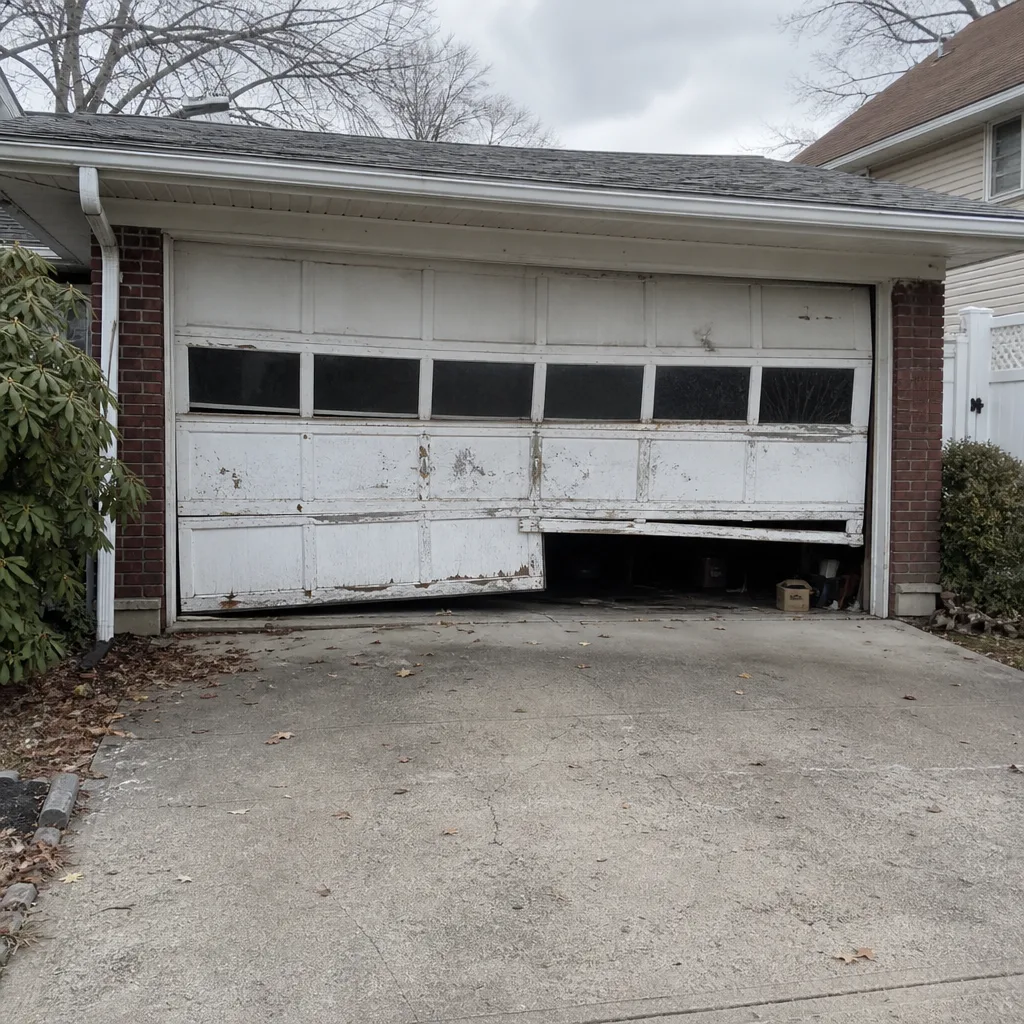 Before
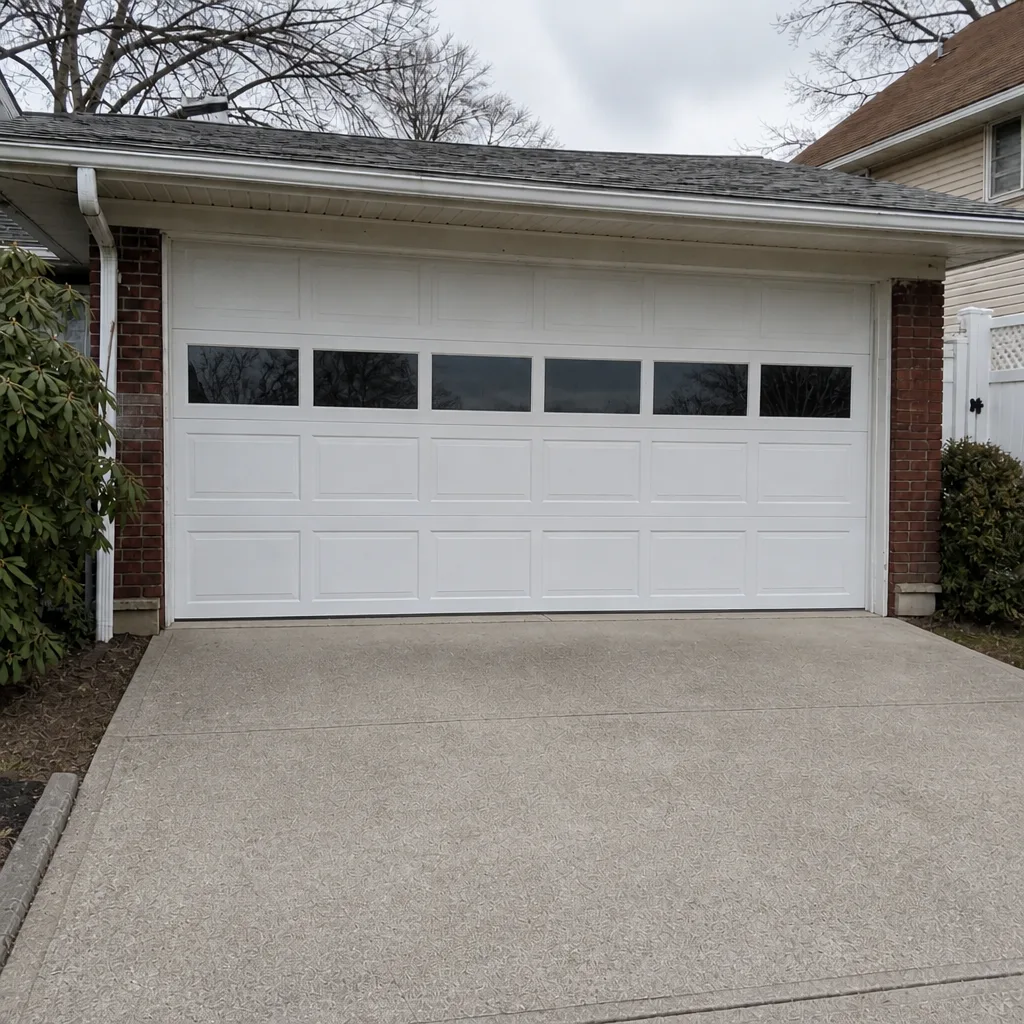 After
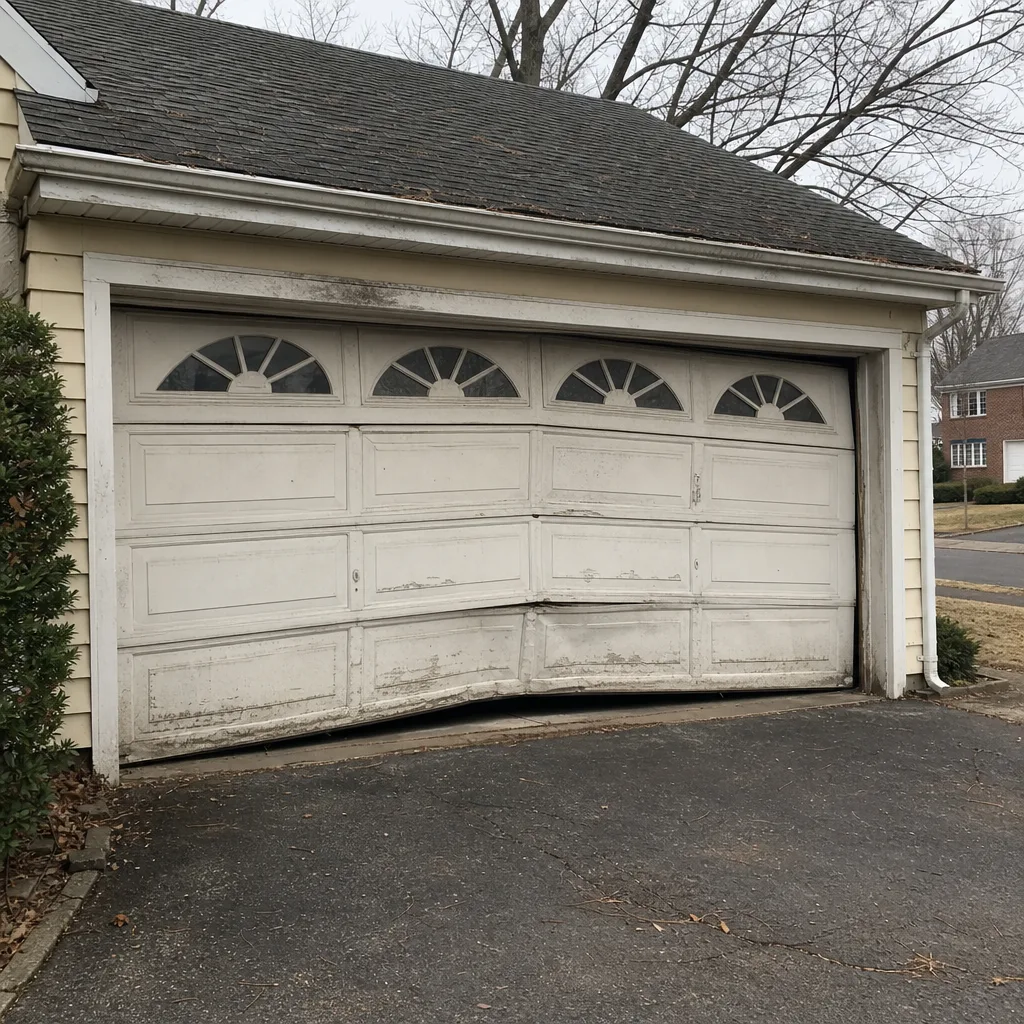 Before
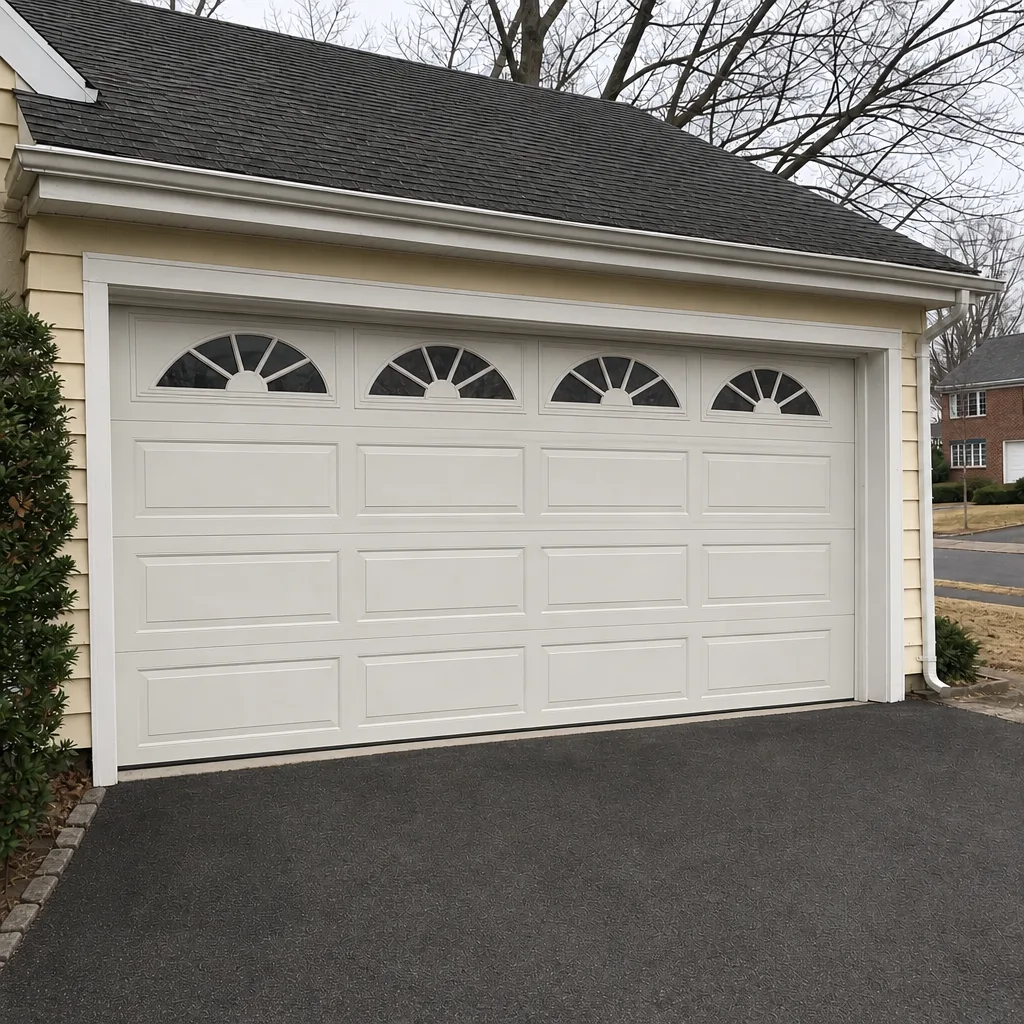 After
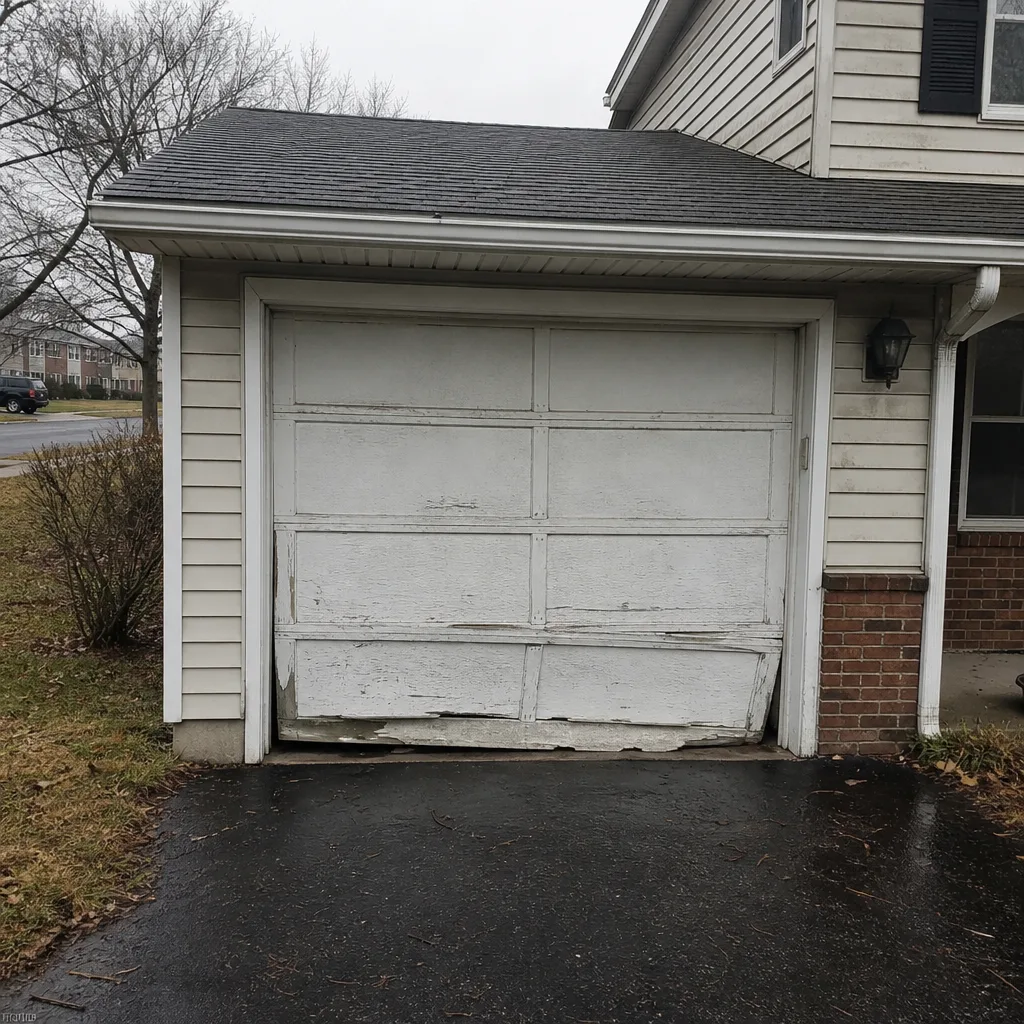 Before
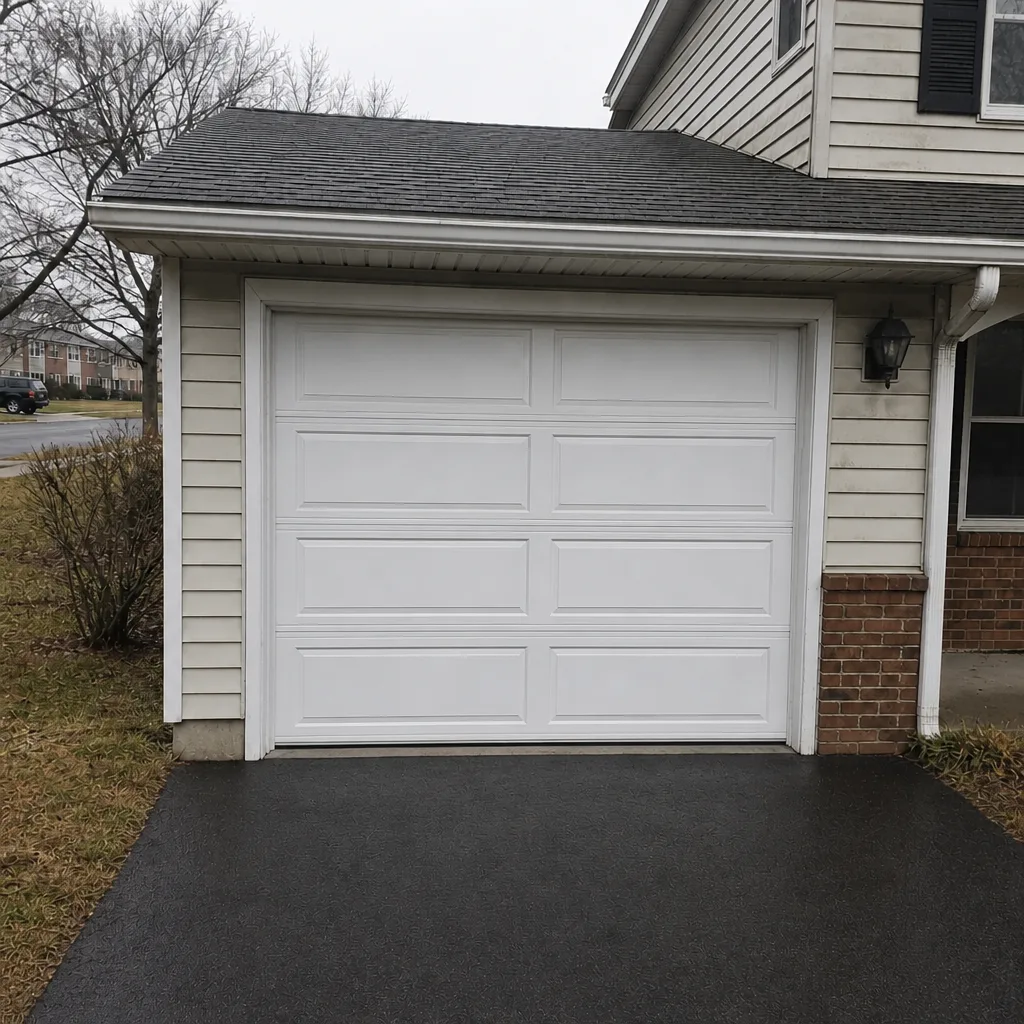 After
When to Call a Professional
Call a professional when a spring breaks, when the door comes off its track, when a cable frays or snaps, or when the door won’t open or close and you can’t identify why. Those are the situations where getting it wrong risks injury or further damage. Also call if your opener’s safety sensors keep triggering, if the door reverses on its own, or if you’re hearing grinding or banging that wasn’t there before.
Wayne Garage Door Repair Co offers free estimates in Wayne, and we can talk through what’s happening before you commit to anything. Call (833) 482-6691. For spring failures, we aim for same-day service so you’re not stuck without a working door. Our technicians have up to 12 years of experience, and they handle both repair and emergency work.
Frequently Asked Questions
Typical repair costs in Wayne depend on the part: a single spring repair generally runs in the low-to-mid hundreds, opener repairs land in a similar range, and track or panel work varies with the damage. The written estimate sets the final price, and we quote and agree it before any work starts. Call (833) 482-6691 for a free estimate.
Wayne homes built through the 1970s and 1990s commonly have doors from Amarr, Wayne Dalton, and Raynor, along with opener systems from LiftMaster, Chamberlain, Genie, and Craftsman. Because the housing stock is layered, you’ll find a mix rather than a single dominant brand. We service all of them.
In most cases, yes. Spring replacement is one of our core services, and we aim for same-day service on spring and opener repairs so you’re not stuck waiting. Call (833) 482-6691 and we’ll confirm what’s possible for your door.
It can be, if the door is structurally sound but dated, or if the mechanism is failing and buyers would notice. A new door improves curb appeal, but a smooth-running door with good springs matters more than appearance alone. A free estimate helps you compare repair against replacement before you decide.
That usually points to a broken spring or a snapped cable, not a dead opener. The opener runs but the door doesn’t lift because the spring no longer carries the weight. Have it checked before replacing the opener, since the motor may be fine.
Yes. We work on LiftMaster and Chamberlain myQ systems and Genie Aladdin Connect, along with legacy openers from Craftsman and other brands. App-connected units have their own logic boards and firmware, and we’re familiar with those platforms. Call (833) 482-6691 to describe what’s happening.
The Bottom Line
Wayne’s garage doors follow the town’s housing history. The 1970s-1990s colonials and split-levels that dominate the neighborhoods bring wide two-car openings, tighter headroom, and hardware that’s often a generation past its prime. The failures you’re most likely to face are springs, opener gears and boards, and track alignment, and Passaic County’s freeze-thaw cycles make those more urgent than in milder climates. Document what you own before it breaks, treat spring and cable work as professional-only, and get a written estimate before any work begins. Our team handles repair, spring replacement, opener repair, installation, and emergency service across Wayne, and a free estimate is one call away.
Call (833) 482-6691 for a free estimate. We’ll help you figure out what’s installed, what’s failing, and what it costs, with the price agreed before work starts.
Written by the team at Wayne Garage Door Repair Co.